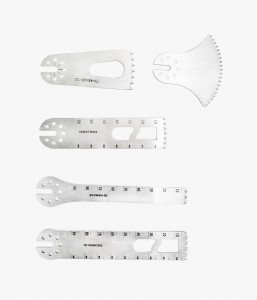
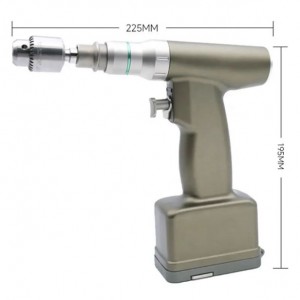
Medical Electric Mini Drill S1071 3.8 N·m 1250 rpm
Acceptance: OEM/ODM, Trade, Wholesale, Regional Agency,
Payment: T/T, PayPal
Sichuan Chenanhui Tehnology Co., Ltd.is a supplier of orthopedic implants and orthopedic instruments and is engaged in selling them, owns its manufacturing factories in China, which sells and manufactures internal fixation implants Any inquiries we are happy to reply. Please choose Sichuan Chenanhui, and our services will definitely give you satisfaction.I : Core Application & Clinical Advantages of the Medical Electric Mini Drill
The S1071 handpiece runs a brushless, fully sealed motor geared down to a maximum of 1250 rpm, which is the opposite of the high-speed philosophy used for large-bone reaming. In small bone, low rotational speed with high torque is what keeps the bit from skiving across a cortical surface that curves away under the finger, and what lets the surgeon feel the moment the bit breaks through. Torque is rated at 3.8 N·m or more, enough to drive a K-wire or a small locking screw without stalling halfway, and radial runout is held under 0.1 mm so the hole stays on the line the drill guide set.
Table 1. S1071 medical electric mini drill rated parameters
|
Parameter |
Rated value |
Where it matters in small-bone work |
|
Speed |
0 to 1250 rpm, infinitely variable | Cutting rate the surgeon can judge by feel |
|
Torque |
3.8 N·m or more | Drives K-wires and small screws without stalling |
|
Radial runout |
Below 0.1 mm | Hole stays inside the corridor the guide set |
|
Handpiece weight |
950 g | One-hand control through long reconstructive cases |
|
Noise level |
45 dB or less | Verbal coordination inside a small surgical team |
|
Temperature rise |
25 degrees Celsius or less | Limits thermal load on already exposed soft tissue |
|
Sterilisation |
Handpiece autoclavable to 151 degrees Celsius, battery excluded | Repeatable reprocessing between operating lists |
|
Battery and charger |
8 V, 1500 mAh; charger AC 100 to 240 V, 50 or 60 Hz | Two batteries cover a list; one charger fits any mains supply |
Core clinical merits:
- Runout below 0.1 mm: at a 1.0 or 1.5 mm bit diameter, a wobbling chuck turns a planned corridor into an oval hole, and close to a digital nerve that margin is the whole safety case for the instrument.
- Low speed, high torque: a 1250 rpm ceiling and 3.8 N·m output let the bit cut rather than skate, which shortens the time a fragment is held under tension and reduces thermal load on small cortices.
- 950 g handpiece: the body sits in one hand through reconstructive cases that run for hours, and the balance point stays behind the wrist instead of pulling the forearm into a compensating grip.
- Noise at or below 45 dB and temperature rise at or below 25 degrees Celsius: a quiet motor keeps verbal coordination inside a small team, and limited heat rise protects soft tissue already exposed by a narrow approach.
- Fully autoclavable handpiece, battery excluded: steam sterilization at 151 degrees Celsius is run with the battery removed, and the sealed motor keeps fluid out across repeated cycles, which is what decides service life in a busy unit.
The tool does not replace the rest of the power catalogue, it narrows it. Our high-speed cannulated brushless drill for long bones, or the micro medical electric spine drill used in laminectomy work, solves a different problem, and a department that buys one medical electric mini drill for every indication ends up with a handpiece that is wrong for two of the three. Our orthopaedic power system range is organised by that distinction, and the implants these small-bone procedures fix, including phalangeal locking plates, sit in the trauma line. Where a unit also needs sawing, the micro multifunctional drill and saw system covers that with a single motor.


II : OR Integration, Sterilisation & Procurement Planning
1. Sterilisation and battery handling
- The handpiece goes to the autoclave without the battery, on a cycle that reaches 151 degrees Celsius, and the sealed motor is the reason that cycle can be repeated without liquid reaching the rotor.
- Batteries are wiped, not autoclaved, and charged outside the sterile field; a department that treats the battery as a sterilizable part shortens its life more than any surgical workload does.
- The chuck key is counted with the tray, because a missing key stops the case as effectively as a missing bit.
2. Battery and charger logistics for a department
- Each set ships with two 8 V, 1500 mAh lithium-ion batteries, so one can charge while the other works through a list.
- The fast pulse charger accepts AC 100 to 240 V at 50 or 60 Hz, which means the same set runs in a district hospital and in a private clinic without a step-down transformer.
- Spare batteries are the item most often under-ordered; two per handpiece covers a normal list, and three covers a unit that shares one drill across two theatres.
3. What to compare before a tender
- Ask for runout and torque as measured figures rather than as adjectives, because both decide whether the tool is a small-bone instrument or a scaled-down general drill.
- Check the sterilization specification, including the temperature and whether the battery is excluded, against the hospital CSSD cycle.
- Weigh the handpiece and run it in a wet lab for the length of a typical case, since 950 g is comfortable at minute five and decisive at hour two.
- Confirm the package contents and the local service route before price, because a medical electric mini drill that waits six weeks for a chuck cannot cover a trauma list.
Why Global Medical Distributors & Hospitals Choose Our Medical Electric Mini Drill
✅ Factory-direct supply of the S1071 without intermediate traders, with tiered pricing for department and tender volumes.
✅ Complete set in every carton, with two batteries, fast pulse charger, isolation channel, chuck key and manual.
✅ Sealed brushless motor and 151 degrees Celsius autoclavable handpiece, built for repeated reprocessing.
✅ Rated parameters published as figures rather than adjectives, so procurement can compare against imported sets line by line.
✅ Custom device colour and packaging for OEM and distributor branding, with flexible minimum order quantities.
Get Your Wholesale Quotation for the Medical Electric Mini Drill
Email us: cah@medtechcah.com
WhatsApp/Call: +86 15008449628
Send the case mix your unit covers and the number of handpieces you plan to hold, and our power instrument team replies with a configuration sheet, unit pricing and a spare battery plan within one working day.
FAQ: Common Questions About the Medical Electric Mini Drill
Q1: What procedures is this drill intended for?
A: Small-bone work of the hand and foot, including phalangeal and metacarpal fracture fixation, K-wire and pin placement, tarsal and metatarsal procedures, and reconstructive work where a narrow exposure limits how much instrument the surgeon can bring to the bone.
Q2: Why is the maximum speed only 1250 rpm?
A: Because the tool is geared for control, not for reaming. At small bit diameters, low speed with 3.8 N·m of torque lets the bit cut steadily and stops it from skating across curved cortical surfaces, which is the failure mode that matters next to a digital nerve.
Q3: Can the whole handpiece be autoclaved?
A: The handpiece is autoclavable at 151 degrees Celsius with the battery removed. The battery is wiped and charged outside the sterile field and must never enter the autoclave.
Q4: How many batteries come with a set, and what is the charger input?
A: Each set includes two 8 V, 1500 mAh lithium-ion batteries and one fast pulse charger rated AC 100 to 240 V, 50 or 60 Hz, so the set works on any hospital mains supply without a transformer.
Q5: Does the package include everything needed for first use?
A: Yes. One main engine, two batteries, one fast pulse charger, one isolation channel, one drill chuck key, one instruction manual and outer packaging are supplied in every carton.
Q6: Can distributors order OEM colours and packaging?
A: Yes. Device colour and outer packaging can be customized for distributor branding, and trial orders can start below bulk volume; a configuration sheet and unit pricing are provided on request.
Note: technical figures here summarize the manufacturer specification for the instrument described, are intended for healthcare professionals, and do not replace surgical judgment, local protocol or the instructions for use.