Considerations Published by CAH Medical | Sichuan, China
This special news release focuses on two core topics from your provided framework: External Fixator Function & Risks in Leg Lengthening Surgery and Recovery Timeline & Daily Life With an External Fixator, offering clear, evidence-based insights for patients and clinical audiences.
Topic 1: External Fixator in Leg Lengthening Surgery – Function, Risks & Safety
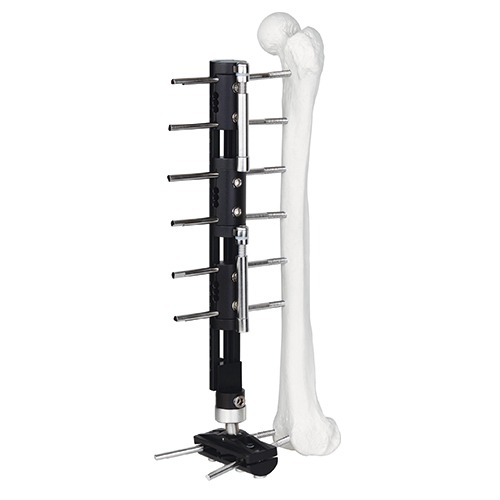
The external fixator is the basic equipment used in lower limb lengthening surgery to allow the separation of bone sections at slow speed while assisting new bone growth.
Application of External Fixator and Usage
During the operation, the orthopaedic surgeon opens the skin and inserts metallic pins passing through the bone and connects them to a metallic frame outside the leg. The frame is then modified every day which is about 1 mm per day by the patient or the clinical staff, to increase the distance between the two sections of the bone.
Risks and Issues
With the use of external fixation for an extended period of time, there is also a risk of developing joint stiffness, especially in cases where the knee, ankle or hip above/below the fixator has remained immobilized for prolonged periods of time, and as such, regular physical therapy is necessary to preserve the range of motion of these joints.
Delayed Bone Healing: Distracted bone is uniting slowly as well as not uniting at all which will result in having to remain with the fixator longer than usual, and sometimes it will require additional surgical procedures to be performed.
Pain/Discomfort: The patient will be experiencing pain from the pin sites, the muscles being stretched, and possibly nerve irritation due to the stretching of the limb which will require pain medication and activity restrictions.
Topic II: Rehabilitation procedure and when to experience everyday life using external fixator.
: The rehabilitation process and how to return to daily life during the wearing of the external fixture
After limb lengthening surgery with an external fixator, the recovery process that comes with it will encompass several different stages that will affect almost every aspect of your daily life.
1. Early postoperative period (within two weeks after surgery): Doctors will perform pain relief therapy and adjuvant therapy. During the hospital stay, There will make initial adjustments to the fixation device. During this time, the patient will most likely need to walk with crutches or a walker.
2. Extension Period (Lasting 2 to 12 weeks): At this stage, the skin around the pinhole must be cleaned daily. Patients may experience pain and must continue physical therapy to prevent muscle atrophy and joint stiffness.
3. Bone healing period (3 to 12 months): Once the bone reaches its intended final length, the bone tissue will continue to undergo hardening calcification while the external fixation device is still in place. At this stage of rehabilitation, patients will gradually begin partial weight training.
4. Removal of external fixation devices (i.e., 6 to 18 months postoperatively): It is usually performed using minimally invasive surgical methods to remove external fixators . After the fixation removed, the patient will undergoes a rehabilitation period of 3 to 6 months to finally restore.
Key considerations in everyday life
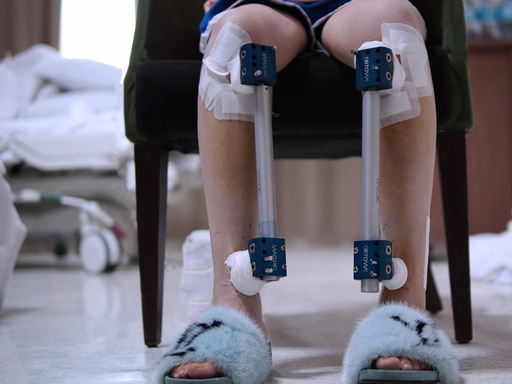
Mobility: Walking with an external immobilizer is feasible, but assistive devices are initially required. After a while, the patient’s gait gradually adapts; But you may feel limited for long periods of time.
Sleep: Most patients are accustomed to sleeping on their backs and use pillows to cushion the affected limb to avoid compression of the fixed brace or pinhole site.
Bathing and hygiene: Keeping the pinhole dry is essential to prevent infection; Therefore, in the early stages of recovery, patients had better use waterproof dressings for protection or take a rubbing bath for cleaning.
Return to normal life: Under the treament and recovery, patients can work, study and social activities; But until the bones are fully healed, patients must avoid playing sports, heavy physical work, or any activities that could cause trauma to the limb.
Conclusion
External fixator leg lengthening is a transformative procedure that requires significant commitment from both patients and clinical teams. While the process is lengthy and carries risks, careful management, dedicated rehabilitation, and modern techniques have greatly improved outcomes, allowing patients to achieve functional limb length correction and improved quality of life.
Post time: May-06-2026